
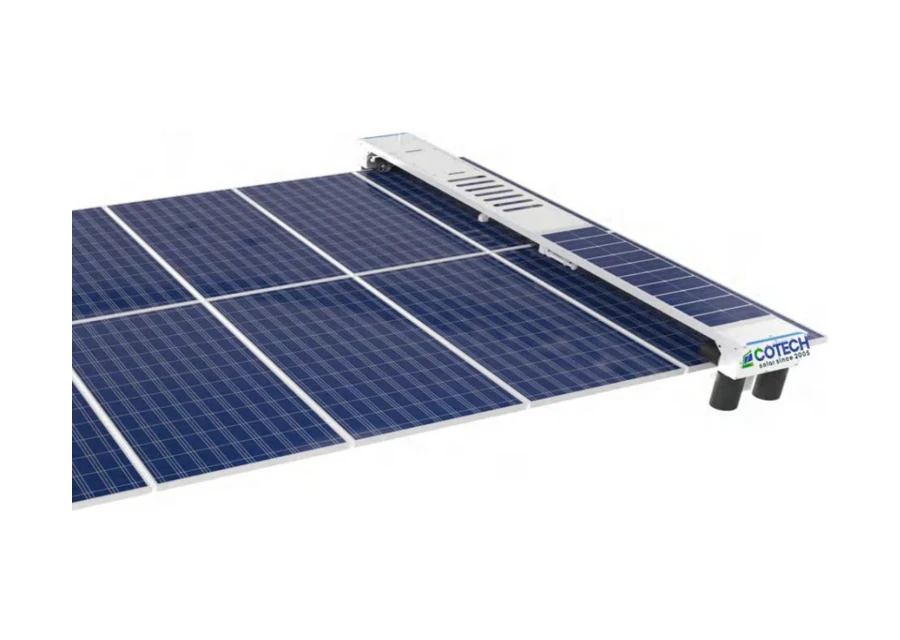
Short answer: cleaning robots pay off where soiling is high and the plant is large — dusty, arid or agricultural sites, and any ground or commercial array big enough that manual cleaning is slow and costly. They recover the energy lost to dust (automated cleaning typically raises generation by a single-digit to low-double-digit percentage), avoid water use with dry-cleaning options, and remove risky, expensive manual labour at height.
Where soiling hurts most
- Dusty and arid regions — sand and dust build up fast.
- Agricultural and industrial areas — pollen, soot and particulates.
- Low-rainfall climates — nothing washes the dust off naturally.
On these sites, uncleaned modules can lose a meaningful share of output between rains.
The three payback drivers
| Driver | How robots help |
|---|---|
| Recovered yield | Automated cleaning restores output lost to soiling |
| Water saved | Dry (waterless) cleaning suits deserts and arid sites |
| Labour & safety | No manual work at height or in hard-to-reach rows |
When a robot is worth it
- Large ground-mount or commercial arrays where manual cleaning is slow.
- High-soiling environments where dust returns quickly.
- Water-scarce sites where dry cleaning avoids trucking water.
When manual cleaning may be enough
- Small residential systems.
- High-rainfall climates that self-clean most of the year.
What to look for
- Waterless (dry) option for arid sites.
- High dust-removal rate and consistent coverage.
- Self-powered / cloud-managed operation for large fleets.
COTECH Solar offers full-auto (array-resident), semi-auto and RTK trackless cleaning robots with waterless options. See Cleaning Robots or ask our team.
FAQ
Do solar cleaning robots increase energy output?
Yes — by removing dust and soiling that block sunlight, automated cleaning restores lost output, typically raising generation by a single-digit to low-double-digit percentage depending on how dusty the site is. The dustier the location and the less rainfall, the bigger the benefit.
Are solar cleaning robots worth it for small systems?
Usually not. Robots pay off on large ground-mount or commercial arrays, and in high-soiling, low-rainfall environments where manual cleaning is slow and costly. Small residential systems in rainy climates are often cleaned adequately by rain or occasional manual cleaning.
Can solar panels be cleaned without water?
Yes — many cleaning robots offer a dry (waterless) mode using microfibre and airflow, which is ideal for deserts and water-scarce sites where trucking in water is expensive. Waterless cleaning avoids both the water cost and the streaking that poor-quality water can leave.