
Short answer: choose a portable power station by matching output power (W) to the devices you'll run at once, battery capacity (Wh) to how long you need them, and solar input (W) to how fast you want to recharge off-grid. Prefer LiFePO4 chemistry for long cycle life and safety, and check the surge rating and recharge options.
Step 1 — Match output power to your load
Add up the wattage of everything you'll run at the same time. The station's continuous output must exceed that, and its surge rating must cover motor start-up (fridges, pumps, tools).
Step 2 — Match capacity to runtime
Battery capacity (Wh) sets how long you can run. Rough runtime = capacity (Wh) ÷ your load (W), minus conversion losses. For multi-day off-grid use, add solar to recharge each day.
| Use | Typical output | Typical capacity |
|---|---|---|
| Phones, laptops, lights | 300–1000 W | 0.5–1 kWh |
| Site tools, small appliances | 1–3 kW | 1–3 kWh |
| Home backup for essentials | 2–5 kW | 3–5 kWh+ |
Step 3 — Size the solar input
For off-grid or long outages, solar recharging matters. A higher solar input rating (e.g. up to ~1000 W) recharges the station faster during the day, so it's ready for the next night.
Step 4 — Choose the chemistry
LiFePO4 is the preferred chemistry for portable stations: thousands of cycles, strong thermal stability and a long service life — better value than consumer lithium over time.
Step 5 — Check the extras
- Fast UPS switchover (<10 ms) for backup.
- Expansion batteries to add capacity.
- The output types you need (AC sockets, USB, DC).
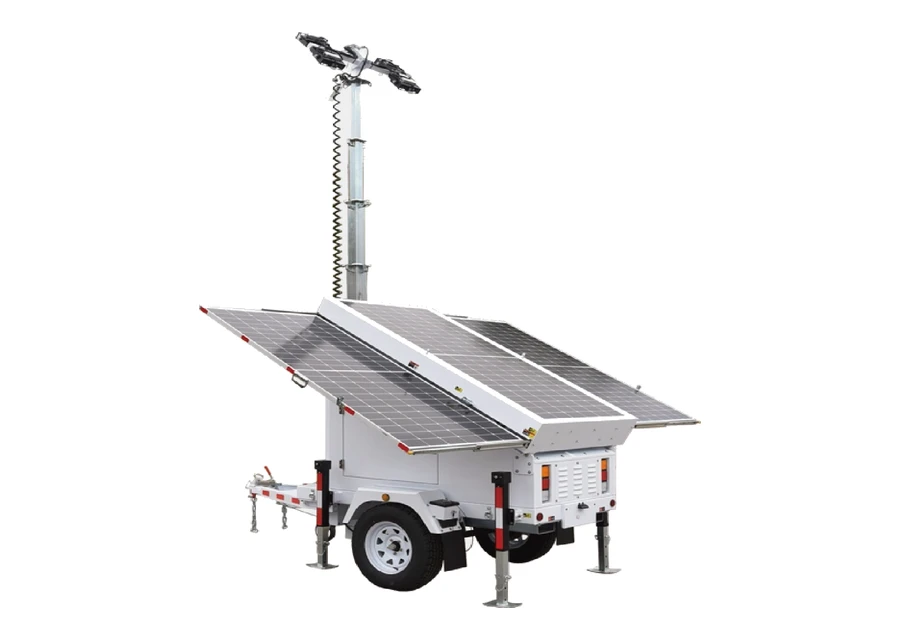
COTECH Solar offers LiFePO4 portable stations from 500 W to 5 kW with expansion batteries and up to ~1000 W solar input. See Mobile Solar Power or tell us your loads.
FAQ
What size portable power station do I need?
Add up the wattage of the devices you'll run at once — the station's continuous output must exceed that, with a surge rating for motor start-up. Then match battery capacity (Wh) to how long you need to run, and add solar input if you'll recharge off-grid.
Is LiFePO4 better for a portable power station?
Yes, for most users. LiFePO4 offers thousands of charge cycles and strong thermal stability, giving a much longer service life than consumer lithium chemistries — better value over time despite a slightly higher upfront cost.
Can a portable power station run a fridge or power tools?
If sized correctly, yes. Check that the station's continuous output covers the device's running watts and that its surge rating covers the motor start-up spike. A fridge or power tool needs headroom for that brief surge, so don't size to the running watts alone.