
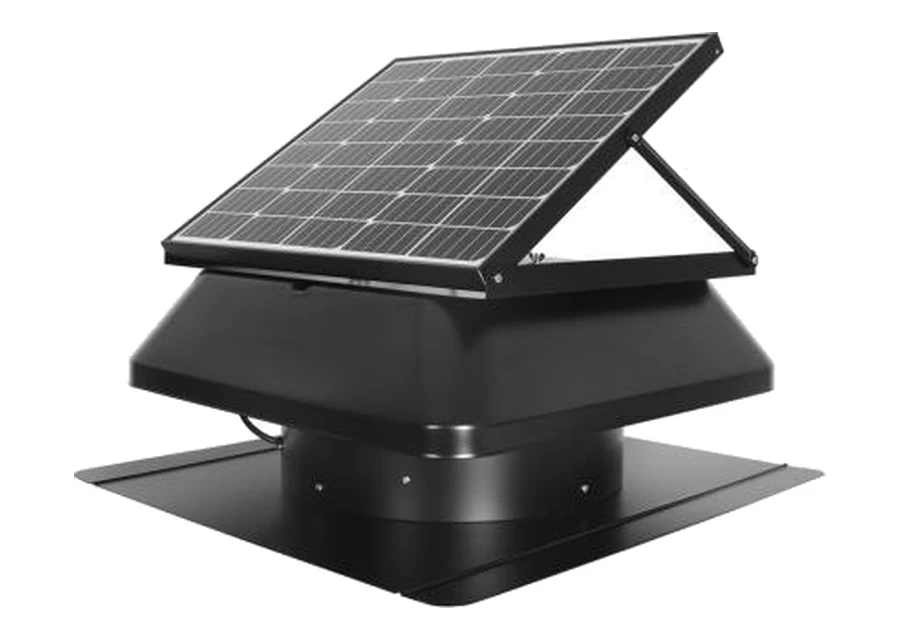
Short answer: solar attic and roof fans do work — they exhaust hot, humid air from attics, workshops, greenhouses and warehouses using free solar power, which lowers indoor temperatures, reduces cooling loads and helps control moisture. They work hardest exactly when you need them — on hot, sunny days — and cost nothing to run. A thermostat and an AC/DC hybrid option keep them useful in cloudy weather too.
How they work
- A solar panel (built-in or separate) powers a brushless DC fan.
- The fan pulls hot air out of the attic, roof space or building, drawing cooler air in through vents.
- A thermostat starts the fan automatically when it gets hot.
Because the sun that heats the space also powers the fan, output rises with the heat.
What they achieve
- Lower attic/indoor temperatures, easing air-conditioning loads.
- Moisture control — venting humid air reduces condensation and mould risk.
- Longer roof life in some cases, by reducing heat build-up.
- Zero running cost and no wiring to mains (for solar-only models).
Where they help most
- Hot, sunny climates with high attic temperatures.
- Greenhouses, workshops, warehouses and barns needing airflow.
- Off-grid or hard-to-wire locations.
Getting the most from them
- Adequate intake vents — a fan needs somewhere for replacement air to enter.
- Thermostat control so it runs only when needed.
- Solar-priority hybrid (solar first, adapter/battery backup) for 24/7 running where required.
COTECH Solar offers brushless solar ventilation — roof and attic fans, greenhouse wall exhausts and industrial gable fans with thermostat and AC/DC hybrid drive. See Solar Ventilation or ask our team.
FAQ
Do solar attic fans actually work?
Yes. Solar attic fans exhaust hot air using a brushless DC fan powered by a solar panel, lowering attic and indoor temperatures and helping control moisture. They work hardest on hot, sunny days — when ventilation is most needed — and cost nothing to run.
Do solar roof fans need mains power?
Solar-only models run entirely on their panel, needing no mains wiring. Hybrid (solar-priority) models add an adapter or battery backup so they can also run in cloudy weather or at night when continuous ventilation is required.
Will a solar fan lower my cooling bills?
By exhausting trapped hot air, a solar attic or roof fan reduces the heat load on the space below, which can ease air-conditioning use. The savings depend on climate, insulation and how hot the space gets, but in hot sunny regions the effect is most noticeable.