
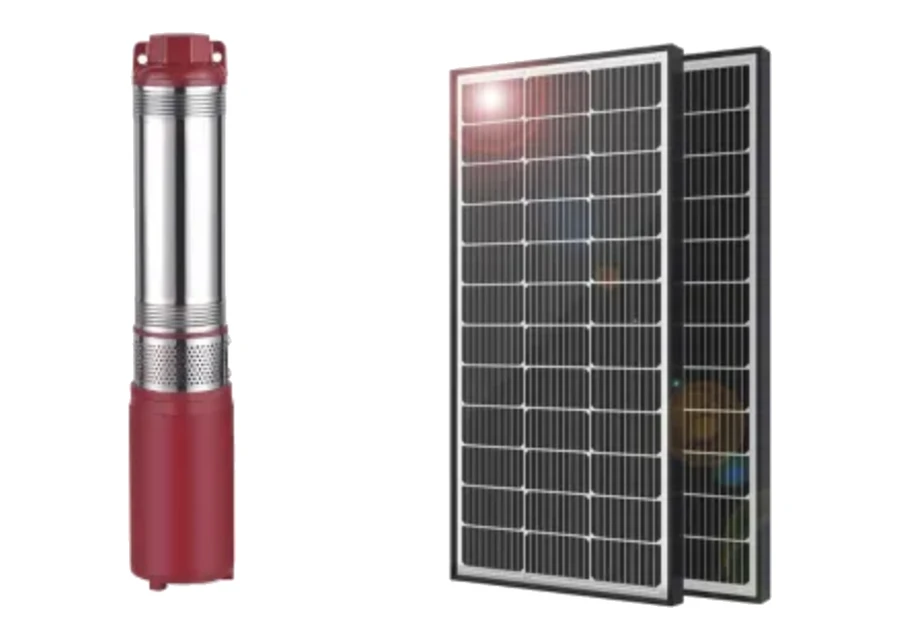
Short answer: when comparing solar pumps, three features do most of the work. A brushless permanent-magnet motor is more efficient and longer-lived than a brushed motor; built-in MPPT squeezes more water out of the same panels across the day; and dry-run protection stops the pump destroying itself when a well runs low. Together they raise output and protect your investment.
Brushless permanent-magnet motor
Brushless (BLDC) motors have no wearing brushes, so they last longer and run more efficiently than brushed motors. Combined with MPPT, brushless permanent-magnet pumps can be around 20–30% more efficient than conventional AC pumps, meaning more water per panel.
- Longer life — no brushes to wear out.
- Higher efficiency — more flow from the same array.
- Quieter, cooler running.
Built-in MPPT
MPPT (Maximum Power Point Tracking) continuously adjusts to draw the most power from the solar panels as sunlight changes. In a pump, that means it starts earlier, stops later and pumps more on cloudy days than a pump without it. Built-in MPPT also saves the cost and failure point of a separate controller.
Dry-run and full protection
A well can drop below the pump intake, and a pump running dry can overheat and fail. Dry-run protection senses this and stops the pump. Good pumps also protect against:
- Overload and over/under-voltage
- Reverse polarity
- Over-temperature
Durability that lasts
For borehole use, look for SS304 stainless wetted parts and an IP68 submersible motor so the pump survives years underwater.
Checklist when comparing pumps
- Brushless permanent-magnet motor (not brushed)
- Built-in MPPT
- Dry-run + full electrical protection
- SS304 wetted parts, IP68 motor for wells
COTECH Solar's solar pumps use brushless permanent-magnet motors with built-in MPPT, dry-run and full protection, SS304 wetted parts and IP68 motors. See Solar Water Pumps or contact our engineers.
FAQ
Why is a brushless solar pump better than a brushed one?
Brushless permanent-magnet motors have no wearing brushes, so they last longer and run more efficiently. Paired with MPPT, they can be roughly 20–30% more efficient than conventional pumps, delivering more water from the same solar array while needing less maintenance.
What does MPPT do in a solar pump?
MPPT (Maximum Power Point Tracking) constantly adjusts to draw the maximum available power from the solar panels as sunlight varies. In a pump, this means it starts earlier, keeps running later, and pumps more water on cloudy days than a pump without MPPT.
Why does a solar pump need dry-run protection?
If a well's water level drops below the pump intake, a pump running dry can overheat and be destroyed. Dry-run protection detects the loss of water and stops the pump before damage occurs, protecting your investment — important for wells that can run low.