
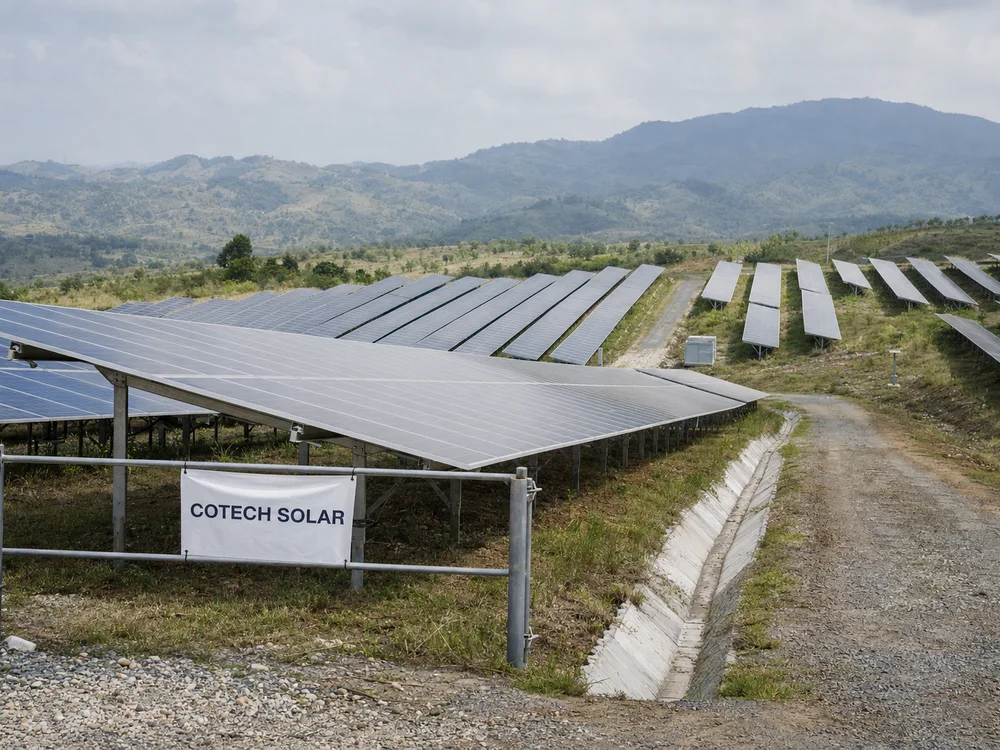
Short answer: single-axis trackers produce meaningfully more energy than fixed-tilt by following the sun across the day, which lowers the cost of energy on large, open, high-irradiance sites. Fixed-tilt is simpler, cheaper and more reliable, and is often the better choice for smaller sites, complex terrain, or where O&M capacity is limited. The right pick depends on project size, land, irradiance and who will maintain it.
Fixed-tilt vs single-axis tracker
| Factor | Fixed-tilt | Single-axis tracker |
|---|---|---|
| Energy yield | Baseline | Higher (follows the sun) |
| Upfront cost | Lower | Higher |
| Moving parts / O&M | None | Motors, controls, maintenance |
| Best terrain | Slopes, small/irregular sites | Flat, open, large sites |
| Best climates | All | High direct-irradiance regions |
When a tracker pays off
- Large, flat, open sites where rows can run uninterrupted.
- High direct-normal irradiance (sunny, clear climates) where tracking gains are largest.
- Projects with O&M capacity to maintain motors, controls and stow functions.
When fixed-tilt is the better choice
- Smaller or irregular sites and sloped terrain.
- Limited O&M — no moving parts means less to maintain.
- Diffuse climates (frequent cloud) where tracking gains shrink.
- Tight budgets where simplicity and reliability matter most.
What a good tracker needs
- Backtracking to avoid row-to-row shading at low sun angles.
- Automatic weather stow to protect against high wind and snow.
- Low self-consumption and robust comms (LoRa / RS-485).
COTECH Solar offers both fixed-tilt ground structures and single-axis trackers (±60°, astronomical tracking, backtracking and auto weather stow). See Mounting System or discuss your ground-mount with our engineers.
FAQ
Are single-axis trackers worth it?
On large, flat, high-irradiance sites with O&M capacity, trackers usually produce enough extra energy to justify their higher cost and moving parts, lowering the cost of energy. On small, sloped or cloudy sites, or where maintenance is limited, fixed-tilt is often the better value.
How much more energy does a tracker produce than fixed-tilt?
Single-axis trackers generate meaningfully more annual energy than fixed-tilt by following the sun, with the largest gains in sunny, high direct-irradiance climates and smaller gains in cloudy regions. The exact uplift depends on location, so model your specific site.
What features should a solar tracker have?
Look for backtracking to prevent row-to-row shading, automatic weather stow to protect against high wind and snow, low self-consumption, and reliable communications. These protect the array and preserve the yield advantage over its life.