
Short answer: choose a mounting system by working through four things in order — the surface (roof type or ground), the loads (local wind and snow), the material grade (standard or coastal), and a project structural calculation that ties it together. Get these right and the array stays put for decades; get them wrong and you risk leaks, corrosion or failure in a storm.
Step 1 — Identify the surface
- Tile roof — needs leak-free tile hooks sized to the tile profile.
- Metal roof — seam clamps (standing seam) or trapezoidal clamps, non-penetrating where possible.
- Flat roof — ballasted (weighted) or anchored, with a set tilt (often 5–15°).
- Ground — screws, concrete footings, or C/I/Π driven piles depending on soil.
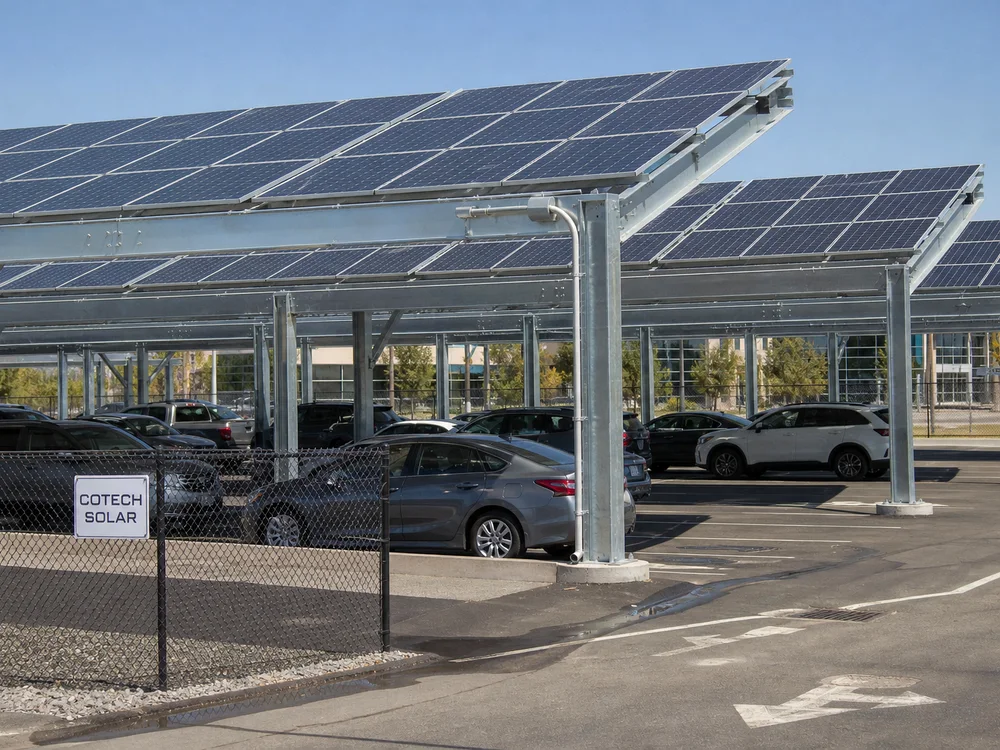
- Car park / water — carport or floating structures.
Step 2 — Get the wind and snow loads
The single most important number is the local design wind speed, followed by snow load in cold regions. These come from the building code for the site (AS/NZS 1170.2, ASCE 7, EN 1991 and national annexes). The structure and its fixings must be rated at or above these values.
Step 3 — Match the material to the environment
| Environment | Recommended materials |
|---|---|
| Standard inland | Anodised aluminium, hot-dip galvanised steel |
| Coastal / high salt | C5-M grade, ZAM-coated steel, stainless fixings |
| High snow | Heavier steel sections, reduced spans |
Step 4 — Insist on a structural calculation
A reputable supplier provides a project structural calculation confirming the design for your wind/snow zone, module layout and fixing pattern. This is what stands behind the warranty and, often, insurance and permitting.
Common mistakes to avoid
- Using an inland-grade system on the coast.
- Ignoring roof load limits when choosing high-power modules.
- Skipping the structural calculation to save cost.
COTECH Solar provides tile, flat and metal roof, ground, carport, balcony, tracker and floating systems — engineered to the relevant code with project structural calculation, and a coastal C5-M option. See Mounting System or send your site details.
FAQ
How do I choose the right solar mounting system?
Work through four steps: identify the surface (roof type or ground), get the local wind and snow load requirements, choose a material grade suited to the environment (standard or coastal), and obtain a project structural calculation confirming the design. A supplier should provide the calculation to back the warranty.
Do I need a structural calculation for solar mounting?
For most commercial and utility projects, yes — and it is good practice everywhere. A project structural calculation confirms the mounting design meets the local wind and snow loads for your module layout, and it typically underpins the warranty, permitting and insurance.
What mounting is best for a metal roof?
Metal roofs generally use clamps rather than penetrations: standing-seam clamps for seamed roofs and trapezoidal clamps for corrugated profiles. This keeps the roof watertight while securely holding the modules. Match the clamp to your exact roof profile.