
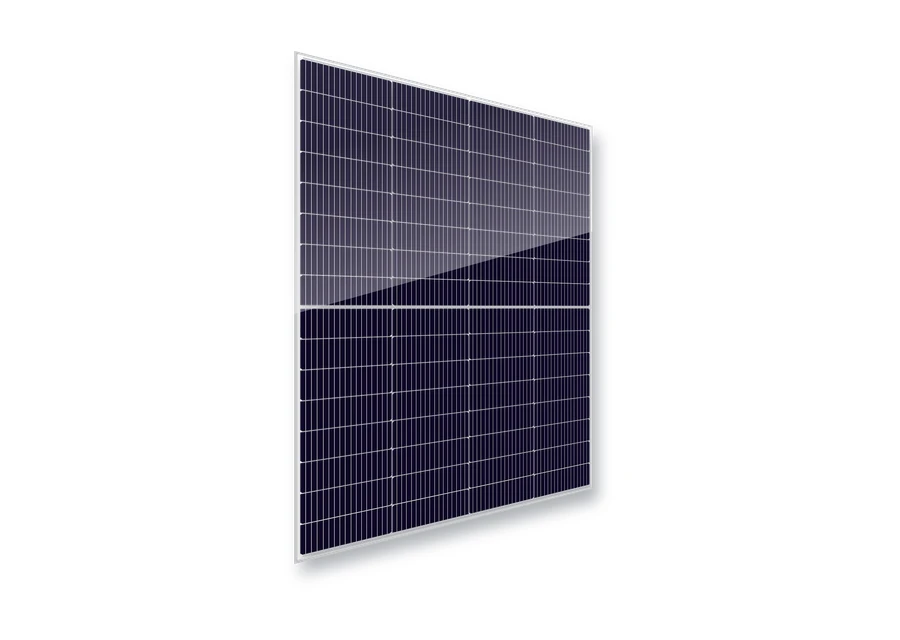
Short answer: for most utility, commercial and residential projects, TOPCon offers the best balance of high efficiency and competitive cost and is the current mainstream choice. HJT wins where hot climates or maximum energy yield matter most, thanks to its very low temperature coefficient and high bifaciality. Back-contact is chosen mainly for premium, all-black residential rooftops where appearance and shading tolerance are priorities.
All three are N-type technologies, which share lower degradation and better temperature behaviour than the older p-type PERC modules they are replacing.
Side-by-side comparison
| Attribute | TOPCon | HJT (Heterojunction) | Back-Contact |
|---|---|---|---|
| Typical module efficiency | ~22–23% | ~22–23%+ | ~22–23% |
| Temperature coefficient | Low | Lowest (best in heat) | Low |
| Bifaciality | High | Highest | Lower (rear covered) |
| Appearance | Standard, fine gridlines | Standard | All-black, no front busbars |
| Relative cost | Lowest of the three | Higher | Higher |
| Best fit | Utility, C&I, residential | Hot climates, trackers, top yield | Premium residential rooftops |
How to read the differences
- Efficiency is similar across all three at the module level today; the real separation is in energy yield over the year, driven by temperature and bifaciality.
- Temperature coefficient matters most in hot regions: a lower value means the module loses less power on a 60 °C rooftop. HJT leads here.
- Bifaciality captures reflected light on the rear side — valuable on white rooftops, ground mounts and trackers, less so on dark flat roofs.
- Appearance is a genuine selling point in residential: back-contact modules have no visible front gridlines, giving a clean all-black look.
Which should you specify?
- Utility and large C&I: TOPCon for the best cost-per-watt, or HJT with trackers where yield gains justify the premium.
- Hot or high-irradiance climates: HJT, for its temperature advantage.
- Premium homes and visible rooftops: back-contact for aesthetics.
- Most rooftops on a budget: TOPCon.
COTECH Solar supplies all three N-type platforms — NeoPro (TOPCon), HyperX (HJT) and NeoBlack (back-contact) — up to 730 W. Compare full specifications on the Solar Modules page, or ask our engineers which fits your project.
Check the model, not just the technology label
The CSTB72 580–605W TOPCon specifications list a Pmax temperature coefficient of −0.29%/°C and a module weight of 31.5 kg. The CSHJ132 700–730W HJT specifications list −0.24%/°C and 37.0 kg. They differ in area, voltage and current as well as technology, so comparing their nameplate watts alone is not an equal-area or equal-cost comparison.
For these two models, HJT has a smaller listed temperature-related power loss, but that alone does not establish a better project return. Compare an actual layout, inverter compatibility and a site-specific energy model, then obtain equivalent-scope quotations. The model pages include the source PDFs and procurement checks; neither page promises stock, lead time or annual yield.
FAQ
Is TOPCon better than HJT?
Neither is universally better. TOPCon usually offers a lower cost per watt and is the mainstream choice for most projects, while HJT delivers a lower temperature coefficient and higher bifaciality, which can produce more energy in hot climates or on trackers. The right choice depends on climate, mounting and budget.
Are back-contact modules more efficient?
Back-contact modules reach similar module efficiencies to TOPCon and HJT (around 22–23%). Their main advantages are appearance — an all-black front with no visible gridlines — and good shading tolerance, which is why they are popular for premium residential rooftops.
Is N-type worth paying more than PERC?
In most cases yes. N-type modules (TOPCon, HJT and back-contact) have lower degradation and a better temperature coefficient than p-type PERC, so they produce more energy over the system's life. As N-type has become mainstream, the price gap over PERC has narrowed significantly.